
Armyworm & Pre-Emergents: Your Autumn Action Plan

Armyworm & Pre-Emergents:
Your Autumn Action Plan
Two threats. One season. Here's exactly what to do — and when.
Part 1: Armyworm — The Overnight Destroyer
If you've ever woken up to find large patches of your lawn looking like they've been mowed to the dirt, armyworm is almost certainly the culprit. These caterpillars are notorious in Perth's late summer and autumn months, and they don't call them "army" worm for nothing — they move in massive numbers and devour turf with shocking speed.
What Is Armyworm?
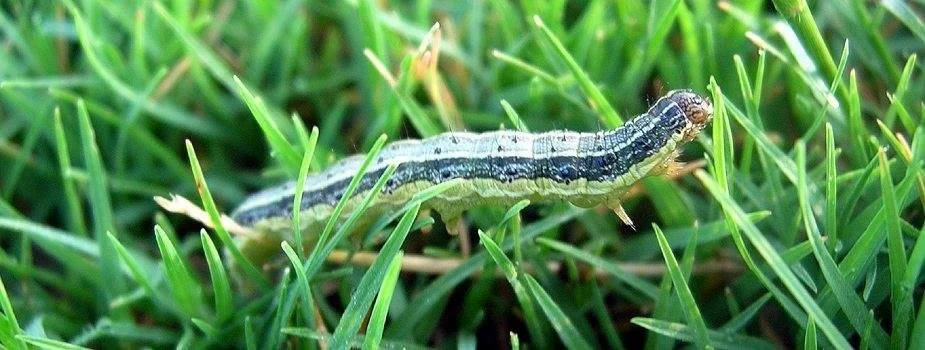
Armyworm is the larval (caterpillar) stage of a moth in the Spodoptera family. The moths lay clusters of eggs on grass blades, and once the larvae hatch, they feed voraciously — mostly at night or during cooler parts of the day, which is why the damage often seems to appear "from nowhere."
The caterpillars are typically 3–4 cm long when fully grown, green to brown in colour, and have a distinctive stripe along the side of their body. They're often visible in the thatch layer if you look closely at the soil surface.
Signs Your Lawn Has Armyworm
- Large, irregular patches of lawn that look "scalped" or brown
- Birds or other wildlife repeatedly pecking at your lawn (they're feeding on the larvae)
- Visible caterpillars in the thatch, especially in the early morning or evening
- Damage that appears or spreads very quickly over just a few days
- Grass blades that look chewed or ragged at the tips
Armyworm populations in Perth tend to peak in late summer through to mid-autumn (February–April). Warm, humid nights accelerate their lifecycle. Don't wait until the damage is severe — early detection and action is everything.
How to Fight Armyworm: 3 Steps
Identify & Confirm
Before treating, confirm armyworm is the culprit. Mix a bucket of soapy water and pour it over a 30cm patch of affected lawn. If armyworm is present, the larvae will surface within a few minutes.
Treat Immediately with Acelepryn GR
Apply Acelepryn GR granules across the affected area and surrounding lawn. Acelepryn is highly effective against armyworm and other lawn grubs, and is safe for birds, bees, and pets when used as directed. Water in well after application.
Repair & Recover
Once the armyworm is under control, give your lawn the best chance to recover. Knights Coastal Special Lawn Mix provides the nutrients and soil conditioning your turf needs to bounce back quickly from an armyworm attack.
Healthy, well-fertilised turf recovers from armyworm damage much faster. A lawn that's going into the cool season in good nutritional condition will regenerate far more readily than a stressed, underfed lawn.
Part 2: Pre-Emergent Herbicide — Stop Weeds Before They Start
While you're dealing with armyworm above ground, there's another battle brewing in the soil. Autumn is when winter annual weed seeds — wintergrass, crowsfoot, creeping oxalis and others — begin to germinate. Miss the window, and you'll be spending all winter fighting weeds instead of enjoying your lawn.
What Is a Pre-Emergent Herbicide?
Unlike post-emergent herbicides that kill established weeds, a pre-emergent herbicide works preventatively. It forms a chemical barrier at the soil surface that interrupts the germination process of weed seeds. Essentially, it stops weeds before you ever see them.
Pre-emergents are most effective when applied to a weed-free, established lawn — so if you have existing weeds, remove or spot-spray them first, then apply your pre-emergent to stop the next generation from taking hold.
When to Apply Pre-Emergent in Perth
Timing is everything. Pre-emergent herbicides must be applied before weed seeds germinate, not after. In Perth, the key windows are:
| Season | Best Application Window | Target Weeds | Type |
|---|---|---|---|
| Autumn | March – April | Wintergrass, Creeping Oxalis, Crowsfoot | Weed |
| Spring | September – October | Summergrass, Crabgrass, Crowsfoot | Weed |
Granular vs Liquid Pre-Emergent — Which Is Right for You?
Granular pre-emergents (like OxaFert and Oxa Pro) are spread using a hand spreader or spreader bag, much like a standard fertiliser. They're easy to apply and many contain added fertiliser to feed your lawn at the same time. They need to be watered in thoroughly after application.
Liquid pre-emergents (like Barricade and Spartan) require a hand sprayer or knapsack sprayer, but provide excellent, even coverage and are often more economical per square metre. Barricade in particular provides up to 6 months of residual weed control.
Pre-emergent herbicides must be watered in after application to move the active constituent down to the root zone where germinating seeds are. Apply, then water thoroughly — this step is critical for the product to work.
Pre-Emergents Won't Kill Existing Weeds
This is the most common mistake Perth lawn owners make. Pre-emergents only work on seeds that haven't germinated yet — they have no effect on weeds that are already growing. Clear your lawn of visible weeds first, then apply your pre-emergent to stop regrowth from seed.
Products We Recommend
Everything you need to beat armyworm and stay ahead of seasonal weeds — all available in the Lawn Doctor shop.
🐛 For ArmywormYour Autumn Lawn Checklist
To make it simple, here's what you should be doing on your Perth lawn right now:
Check for armyworm
Do the soapy water test on any suspicious brown patches. Act immediately if larvae are present — every day counts.
Treat armyworm with Acelepryn GR
Apply broadly and water in. Monitor over the next few days to ensure the larvae are eliminated.
Clear existing weeds
Hand-pull or spot-spray any weeds currently in your lawn before applying pre-emergent.
Apply pre-emergent herbicide
Choose a granular (OxaFert, Oxa Pro, Freehand) or liquid (Barricade, Spartan) option and apply across the entire lawn. Water in thoroughly.
Feed your lawn for recovery
Follow up with a quality lawn food like Knights Coastal Special Lawn Mix to give your turf the nutrients to recover strongly and head into winter in great condition.
Autumn in Perth is a critical window for lawn care. The good news? Taking action now — against both armyworm and weed germination — pays dividends right through winter and sets you up for a lush, healthy spring lawn. Don't let the cooler weather lull you into thinking the lawn work is done for the year.
Ready to Protect Your Lawn?
Shop our full range of armyworm treatments and pre-emergent herbicides, and keep your Perth lawn looking its best all year round.
Shop Lawn Care Products More Lawn Tips